


A Google Business Profile directly improves your visibility in local search results and the map pack — it does not work as a direct ranking signal for your website’s organic position. That said, a well-optimized listing drives real traffic to your site, builds trust with potential customers, and strengthens the local signals Google weighs when ranking businesses in your area. This guide is for local business owners and marketing managers who want to understand what Google Maps SEO does, which ranking factors matter, and which optimizations produce measurable results.
Key Takeaways
- A Google Business Profile directly affects your placement in local search results and the map pack — not your website’s organic ranking position.
- 46% of all Google searches seek local information — the audience your listing reaches every day.
- Businesses with complete profiles are 70% more likely to attract in-person visits than those with incomplete information.
- A complete Google Business Profile increases perceived trust by 2.7 times compared to an incomplete one.
- 87% of consumers read online reviews for local businesses before making a contact or purchase decision.
- 48% of consumers avoid businesses with fewer than 4 stars — your review rating is part of your local ranking signal.
- Businesses with over 100 images receive 520% more calls than those with fewer photos.
- A local business ranking in the top 10 has an average of 81 citations across the web.
- Selecting the right primary and secondary categories on your profile directly influences which local searches you appear for.
What Is Google Maps SEO?
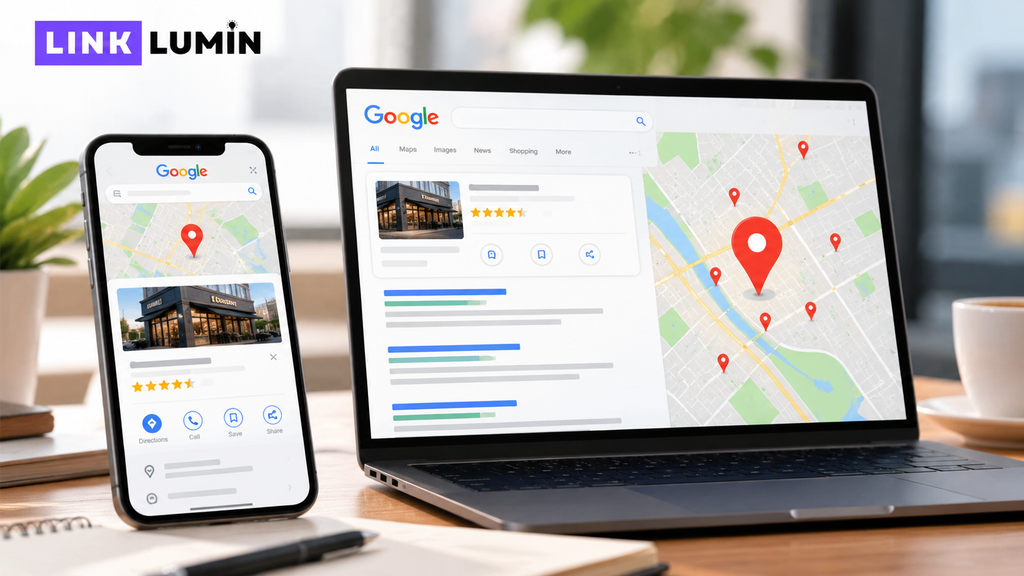
Google Maps SEO refers to the process of optimizing your Google Business Profile — and the broader signals associated with your business online — to improve your visibility in Google Maps and local search results. When someone searches for “plumber near me” or “digital marketing agency North York,” Google surfaces a map with a short list of businesses near the top of the page. That block of listings is the local pack, and appearing in it is what Google Maps SEO targets.
Google Business Profile (formerly Google My Business) is the free tool Google provides for businesses to manage their presence in these local results. A business that appears in Google Maps without claiming its profile is operating with an unverified, auto-generated listing — missing the ability to manage its business information, respond to reviews, add high quality photos, or publish posts.
Google Maps SEO is distinct from traditional search engine optimization, which focuses on improving a website’s position in organic results below the map pack. The two disciplines overlap — local signals and organic signals reinforce each other — but they target different placement areas and use different ranking criteria. For local businesses, Google Maps SEO is often the faster route to visibility for searches with clear local intent, and a business in the local pack gains exposure that organic rankings alone cannot replicate on mobile, where map results fill the screen before any blue links appear.
How Google Ranks Local Businesses
Google uses three primary factors to determine which businesses appear in local search results and in what order: relevance, distance, and prominence. Understanding how each factor works points directly to where optimization effort should go.
Relevance
Relevance measures how well your listing matches what a user is searching for. Google evaluates your primary category, secondary categories, business description, services listed, and the keywords present throughout your profile to determine whether your business fits a given search query. A listing with a vague or incomplete profile may not appear in local searches it qualifies for — Google cannot confidently match it without enough signal. Selecting primary and secondary categories carefully and writing a keyword-informed business description are the most direct ways to strengthen relevance for the local searches that matter to your business.
Distance
Distance measures the physical proximity of your business’s location to the user, or to the location specified in the query. This is a factor local businesses cannot optimize directly — your business address is what it is. What you can control is ensuring that address is accurate and consistent across your profile and every directory where your business is listed. For service area businesses that operate without a public storefront, Google allows you to define a service area so your listing appears for searches within your operating region.
Prominence
Prominence measures how well-known and established your business is — online and in the real world. Google evaluates the quantity and quality of reviews, the number and consistency of citations from local business directories and external websites, links pointing to your site, and how much verifiable information is publicly available about your business. A local business ranking in the top 10 has an average of 81 citations across the web, which reflects how much consistent reference to your business across platforms contributes to prominence. Building citations on platforms like Yelp and TripAdvisor, in relevant directories, and through local partnerships strengthens this signal directly.
Does Your Google Maps Listing Help Website Rankings?
Your Google Business Profile does not directly move your website up in organic search results. Google’s local ranking algorithm and its organic web ranking algorithm are separate systems. A business can rank in the local pack without ranking strongly in organic results, and vice versa.
What your listing does affect is local search visibility, and that produces real downstream effects on your website.
When your profile includes a website link, users who find your business through Google Maps or the local pack can click through to your site. This referral traffic is high-intent: people searching Google Maps often intend to buy or visit immediately, not to research general options. That intent makes map-sourced traffic different from typical organic traffic — visitors arriving from Google Maps are typically further along in the decision-making process and more likely to take action.
Your listing also builds local signals that strengthen your overall digital presence. Consistent NAP (Name, Address, Phone Number) information across your profile and local directories signals to Google that your business information is reliable. Reviews accumulate on your profile and feed into your prominence score. Photos, posts, and complete business details increase trust with prospective customers regardless of how they first find your business.
Adding UTM tracking parameters to the website link in your Google Business Profile lets you measure how much traffic your listing generates and whether those visitors convert. Without UTM tracking, that traffic blends into generic organic data and the listing’s contribution goes unattributed.
The relationship works in both directions. A strong website with relevant content, location-specific pages, and accurate local schema markup reinforces your business’s prominence signals and supports your local search rankings. Google Maps SEO and on-site optimization are not competing priorities for local businesses — they reinforce each other.
How to Optimize Your Google Business Profile
Claim and Verify Your Listing
Claiming and verifying your Google Business Profile is the starting point for Google Maps SEO. An unclaimed listing gives you no ability to manage your business information, add photos, respond to reviews, or publish posts. Verification tells Google you are the legitimate owner of the business at the listed location and activates the profile’s full functionality. Google offers several verification methods — postcard, phone, email, or video — depending on your business type and location. Until your listing is verified, you have no control over how your business information appears in Google Maps and local search results.
Complete Every Detail in Your Business Information
A complete Google Business Profile improves your local search rankings and builds credibility with users who find your listing. Fill in every available field: business name, business address, business hours, phone number, website link, and business description. Include your service area if you operate without a walk-in location, add holiday hours when they differ, and list your products or services with descriptions. Businesses with complete profiles are 70% more likely to attract visits than those with missing information, and a complete profile increases perceived trust by 2.7 times.
Choose the Right Primary and Secondary Categories
Category selection is one of the most direct factors in Google Maps SEO. Your primary category tells Google what kind of business you are — it should describe your core service as precisely as possible, not the broadest category that technically applies. Your secondary categories identify additional services or specializations you offer. Selecting precise primary and secondary categories heavily influences which local searches your profile appears in and has a direct effect on your local ranking. Choose categories based on what your business actually does. Google assesses whether your actual business activity matches your category selection, and a mismatch between your category and your real-world business reduces your relevance for the searches you want to appear in.
Use Relevant Keywords in Your Profile
Incorporating relevant keywords into your business description and services list helps Google understand what your business offers and which search queries it should surface for. Your business name field should contain only your actual business name — adding keywords there violates Google’s guidelines. Your description is where you can naturally include the services you provide, the areas you serve, and the problems you solve for customers. Write it for the person reading it first, and include the specific terms your local customers actually use when searching for businesses like yours.
Add High-Quality Photos Consistently
Visual content is a measurable ranking and conversion factor. Businesses with over 100 images receive 520% more calls than those with fewer photos, and uploading high-quality photos increases direction requests and website clicks. Add photos of your exterior (so customers can recognize the location), interior, team, products, and completed work or services. Update your photos regularly — Google treats profile activity as a signal, and consistent updates indicate an active, maintained business. Use genuine photos of your actual business rather than stock images. Stock imagery does not produce the same trust signals with potential customers who are reviewing your profile before deciding whether to make contact.
Generate Reviews and Respond to Every One
Online reviews are a direct ranking signal in Google’s local algorithm. Businesses with more reviews rank higher in local search results, and responding to reviews — both positive and negative — can improve search ranking and builds credibility with prospective customers. Beyond ranking, 87% of consumers read reviews for local businesses before deciding whether to contact them, and 48% will not consider a business with fewer than 4 stars. Your review profile simultaneously affects your position in local search results and your conversion rate with users who find you there.
Encourage satisfied customers to leave reviews by sharing your Google review link directly after a completed project or purchase. Respond to every review. A professional response to negative reviews signals that your business takes customer feedback seriously — negative reviews left unanswered often carry more reputational weight than the review itself.
Publish Google Posts Regularly
Google provides four different types of posts for businesses: updates, offers, events, and products. Posts appear on your Business Profile in search results and let you share promotions, local events, new services, and updates directly with users who find your listing. Posts remain visible for seven days before expiring, so regular publishing keeps your profile current. Posting does not directly affect local rankings, but it gives prospective customers reasons to engage with your profile and signals to Google that your business is active. For local businesses running promotions or participating in local events, Posts are a free channel that requires no ad budget.
Build Local Citations Across Relevant Directories
Citations are mentions of your business’s name, address, and phone number on other websites and directories — Yelp, TripAdvisor, local business directories, and industry-specific platforms. Building citations from relevant local directories strengthens the prominence signals Google uses for local ranking. Consistency matters: your business information must match exactly across every citation. Variations in address abbreviation, phone number format, or business name create conflicting signals that reduce Google’s confidence in associating those mentions with your verified listing. A local business ranking in the top 10 has an average of 81 citations — citation presence at that scale is not optional in competitive local markets.
The Local Pack and What It Means for Local Businesses
The local pack — also called the map pack — is the block of three business listings with a map that appears near the top of Google search results for local queries. These three positions attract a significant share of clicks for any local search, particularly on mobile where map results fill the screen before organic results appear.
Appearing in the local pack requires a claimed and optimized Google Business Profile, sufficient relevance to the query, a business location or service area covering the user’s area, and enough prominence — through reviews, citations, and online presence — to outrank local competitors. Users searching Google Maps often intend to buy or visit immediately, making the local pack a high-intent channel that organic results alone do not replicate for local businesses.

Tracking Your Google Maps SEO Performance
Google Business Profile’s built-in Performance section shows how many users found your listing through direct searches (typing your business name) versus discovery searches (typing a category, product, or service). It also tracks calls made from the listing, direction requests, and website clicks. These metrics give you a baseline view of how your profile performs and whether optimization work is producing measurable activity.
For more precise tracking, add UTM parameters to the website link in your profile. UTM tracking lets your analytics platform identify traffic from your Google Business Profile separately from other organic traffic and determine whether those visitors convert. Without it, map-sourced traffic blends into general organic data and you lose visibility into what your listing is contributing.
Review your performance data monthly. Track changes in search impressions, direction requests, and website clicks alongside any optimization work — new photos, updated categories, review volume changes. Over time, patterns show which improvements had a measurable effect and which local searches generate the most engagement from your listing.
Frequently Asked Questions
What is Google Maps SEO and why does it matter for local businesses?
Google Maps SEO is the process of optimizing your Google Business Profile and local online presence to appear prominently in Google Maps and the local pack. For local businesses, this means completing every section of your profile, choosing accurate primary and secondary categories, building a consistent citation footprint, managing reviews, and publishing regular updates. Google evaluates relevance, distance, and prominence when ranking businesses in local search results — optimization work addresses all three. It matters because 46% of Google searches seek local information, and the local pack is where those searchers find their options. Google Maps SEO does not guarantee specific rankings or positions, but consistent, accurate optimization improves your local visibility over time.
How does a Google Business Profile affect local search rankings?
A complete, active Google Business Profile is the foundation of local search rankings. It tells Google what your business does, where it operates, what hours it keeps, and how customers have experienced it. Google uses this information — alongside citation signals and review data — to evaluate your business for local searches. Businesses with complete profiles are 70% more likely to attract visits. A profile with accurate business information, a relevant primary category, current photos, and consistent recent reviews gives Google more complete and trustworthy data to rank your business with. Incomplete or inaccurate profiles reduce your local visibility regardless of how strong your website may be.
Why does accurate business information matter for Google Maps ranking?
Accurate business information affects your Google Maps ranking directly. Google uses your profile — name, address, phone number, categories, and description — to match your listing to relevant search queries. Missing or outdated information creates gaps that reduce Google’s confidence in surfacing your listing. Beyond your profile, consistent NAP information across Yelp, TripAdvisor, and local business directories strengthens the prominence signals Google uses for local ranking. Inconsistencies between your profile and how your business information appears elsewhere send conflicting signals that dilute your local authority. Keep all of the details current and consistent across every platform where your business is listed.
How do reviews influence local search results and a business’s search engine presence?
Reviews are a direct local ranking factor. Businesses with more reviews rank higher in local search results, and responding to reviews signals active engagement to Google’s search engine and to prospective customers reading your profile. Beyond ranking, 87% of consumers read online reviews for local businesses before deciding whether to make contact, and 48% avoid businesses with fewer than 4 stars — which means your review profile shapes both your position in local search results and your conversion rate with users who find you there. Treat review generation and response as a consistent business practice, not a one-time campaign. Encourage customers to share their experience after a completed service or purchase, and respond to every review with care and professionalism.
How does defining a service area affect Google Maps ranking for local businesses?
For service area businesses — businesses that serve customers at their locations rather than from a public storefront — Google allows you to define a service area on your Google Business Profile rather than displaying a business address. Defining a service area tells Google the geographic range your business covers, which allows your listing to appear in local searches conducted within that area. Define it to reflect where you actually serve customers — not the broadest possible range — since overextending your service area can dilute your relevance for the searches that produce most of your actual work. Service area businesses benefit from the same optimization steps as physical location businesses: complete information, accurate categories, reviews, photos, and consistent citations.
What are all the details needed to fully optimize a Google Business Profile for Google Maps ranking?
A fully optimized Google Business Profile covers: a verified listing, accurate business name and business address, business hours including holiday hours, a primary category matched precisely to your core service, secondary categories for additional services, a keyword-informed business description, a website link with UTM tracking, at least 20 high quality photos (businesses with over 100 images receive 520% more calls), active management of positive reviews and negative reviews, and regular Google Posts. Outside the profile, sustained Google Maps ranking depends on consistent NAP information across Yelp, TripAdvisor, and relevant directories. The profile is your starting point — citation consistency and active review management are what sustain your ranking over time.
Ready to Build Local Visibility for Your Business?
Link Lumin works with local businesses in Ontario to build and maintain Google Business Profiles that perform in competitive local markets. Whether you are starting from an unclaimed listing or looking to improve a profile that is not generating calls, the team identifies what is holding your local visibility back and addresses it with a clear plan.
Contact LinkLumin to discuss your local SEO goals — or call (647) 699-2555 to speak with a local SEO specialist. You can also reach the team at contact@linklumin.com.
61 Alness St Unit 226, North York, ON M3J 2H2